Probate Court Records give families and attorneys quick access to probate case filings and a probate docket search that reveals estate settlements, creditor claims, and executor filings. By using the county’s probate court online portal, users can perform a probate file lookup, view probate record retrieval options, and check a probate case status. The system also lists probate court archives, probate record fees, and a probate record request form for those needing certified copies.
Probate Court Records also include a wealth of probate estate documents such as wills, codicils, probate trust documents, and probate inheritance records that guide heirs through asset distribution. A simple probate case number lookup returns probate property deeds, probate public records, and probate court minutes, while the probate court database supports probate record indexing and case transcript downloads. This streamlined access helps verify case details without extensive paperwork.
How to Search Probate Court Records
Probate Court Records help families, attorneys, and researchers find probate case filings, run a probate docket search, and check the status of an estate case handled in Greenville County, South Carolina. The county’s public index serves as the probate court database for a probate file lookup, and the Probate Court clerk handles certified copies and record requests. You can also consult case information to locate official filings. The steps below show how to search the portal, read each result, and tell a signed court order apart from a plain docket entry. They cover a probate case number lookup, a name search, and a probate case status check for people who hold no case papers.
Official Search Portal: https://www2.greenvillecounty.org/scjd/publicindex/
Steps to Search
- Open the public index page in a current web browser. The Greenville County judicial public index loads at the address shown above, with the case-search fields on the site.
- Select the probate case type or court division listed in the search options. A probate estate carries a probate case number, so a civil or criminal case search will miss it.
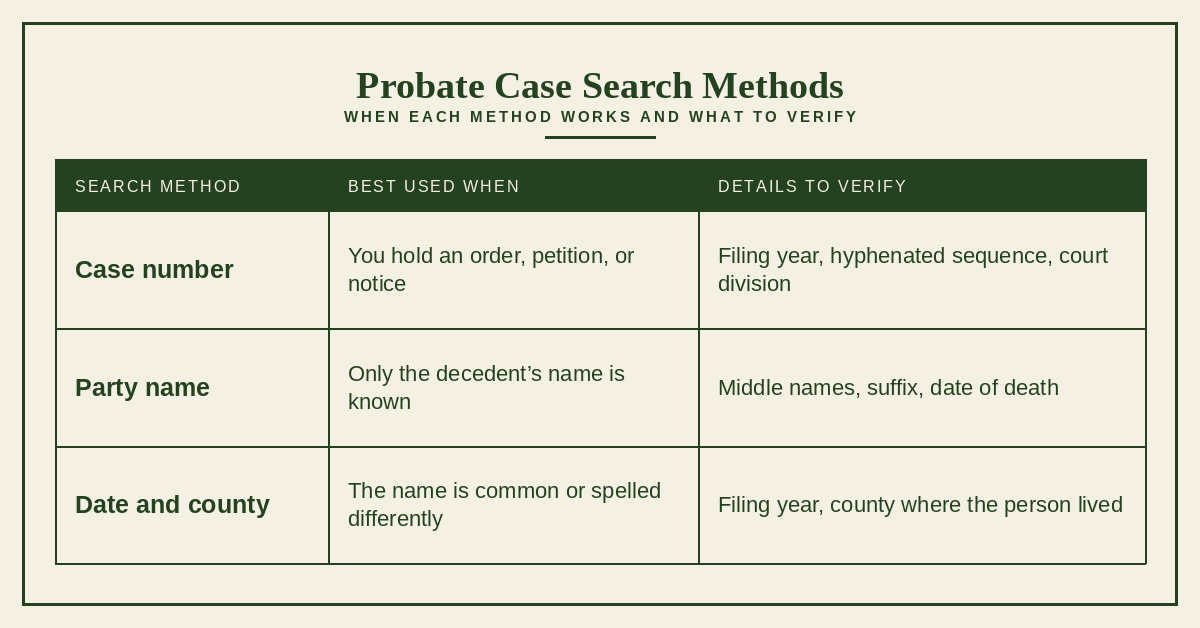
- Enter the case number if your papers show one. Type the full hyphenated number, including the filing year, because a missing digit often brings back no results.
- Search by party name when no case number is available. Use the decedent’s legal name, start with the surname, and add a first name or date of death if the portal offers those fields.
- Set the county and date filters that the portal displays. A narrow year range removes duplicate names and speeds up a probate filing history review.
- Open the matching result and read the case detail page. Compare the case number, the decedent’s name, the date of death, and the opening date before you open a document.
- Read the probate docket entries in date order. The entries list petitions, orders, notices, inventories, accountings, and the last disposition of the estate. Hearing dates listed in the docket act as the probate calendar for that case.
- Request official copies through the Probate Court clerk. The public index does not issue certified copies, and a probate record request form goes to the clerk’s office.
The portal shows what the court has released for viewing. A docket entry can name a filing without offering a scanned image, and a new case may take time to appear after the clerk receives it. If you need a probate case summary download, save the docket pages you can view and ask the clerk for the remaining papers.
A summary downloaded from the index reflects the index data at that moment. For court business such as a hearing date or a signed order, request a certified copy so the document carries the clerk’s seal.
Types of Probate Court Records
Greenville County sorts estate matters by case type, and each type carries its own papers, deadlines, and closure rules. Knowing the type before you search trims the result list and explains why one file holds a full administration while another ends after a short summary filing. The groups below cover the case types that appear before the probate court.
Estate Administration Records
An estate administration file opens when the court accepts a petition and appoints a personal representative to settle the estate. The probate estate documents then track creditor notices, the estate inventory, property sales, tax work, and distributions before closure. Look for the estate’s full legal name, the probate case number, the date of death, and the name of the executor or administrator in the opening entries.
Will Probate Records
A will probate file holds the original will, any codicils, the petition, and the order that admits the will to probate. South Carolina law requires the custodian of a will to lodge it with the probate court within 30 days after the testator’s death under S.C. Code §62-3-203. After admission, the record shows the date the will was signed, the named executor, and the court authority for that person to act.
Intestate Estate Records
When a person dies without a will, the court opens an intestate estate and appoints an administrator under South Carolina law. S.C. Code §62-2-101 sets the order in which a spouse, descendants, parents, and siblings inherit. Where a spouse inherits with no surviving descendants, the statute applies a $100,000 first share before the remainder is divided. The file identifies the administrator and the petitioning party, yet it may omit relatives who never took part in the case.
Small Estate Records
South Carolina allows a shorter summary process for qualifying small estates under S.C. Code §62-1-301. The statute places a $25,000 ceiling on the value of the decedent’s personal estate, with real property and assets passing outside probate handled under separate rules. Ask the clerk to confirm the current dollar threshold before you rely on it, since the legislature can change statutory amounts. These files often hold fewer entries because no full administration follows.
Guardianship Records
A guardianship file concerns a minor or another person whose needs call for a guardian of the person or estate. The docket holds the petition, the appointment order, any bond, an inventory of protected assets, and later accountings. Reading the appointment date and the exact wording of the order shows how much authority the guardian received.
Conservatorship Records
A conservatorship file deals with an incapacitated adult and the handling of that person’s money or property. The record includes the petition, proof of incapacity in some matters, the order of appointment, and accountings filed as the case moves forward. These files touch medical and financial details, so the clerk applies rules that may limit who may receive full copies.
The closing marker tells you whether the estate work is finished or still pending. A file can stay open for years when creditors, property sales, or heir claims remain unresolved.
Probate Court Filings
Each step in an estate produces a numbered filing with a date, a document title, and a link to the record. A probate filing history lists those entries from the opening petition to the closing order. Knowing what each filing proves helps you request the right paper and avoid paying for a full file copy.
Probate Petitions
The opening petition states the decedent’s name, date of death, county of residence, known relatives, the proposed personal representative, and a short description of the estate’s assets. A petition to probate a will asks the court to admit the will, and a petition for administration asks the court to appoint an administrator. The clerk reviews the filing before docketing it, so the docket date may sit a few days after the signature date.
Types of petitions filed in probate
- Petition to probate a will and appoint the named executor
- Petition for administration when no will exists
- Petition for letters of administration with the will annexed when the named executor cannot serve
- Petition to appoint a guardian or conservator
The petition identifies the people behind the request, so it is often the fastest document for confirming that the clerk received a filing. The probate case number appears on the docket stamp after the court accepts the petition.
Wills and Codicils
After a death, the custodian delivers the original will to the probate court. A codicil is a later change to a will, and it follows the same lodging requirement. The court examines the documents, holds a hearing if an heir contests them, and records the outcome in an order admitting the will. Once admitted, the executor may seek letters of administration to act on the estate’s behalf.
Letters Testamentary
Letters testamentary are the court’s written proof that a named executor has authority to act for the estate. The document names the personal representative and the estate, and it limits the powers that require further court approval, such as selling real property outside the terms of the will. When no will exists, the court issues letters of administration instead, and when a will names no willing executor, it may issue letters of administration with the will annexed.
Estate Inventories
South Carolina law gives the personal representative 90 days after appointment to file an inventory with the probate court under S.C. Code §62-1-704. The filing lists the estate’s assets and liabilities with the values known at that point. New assets found later can appear in a supplemental filing, so an early inventory may not show the full estate. The inventory also names real property, which helps you compare probate property deeds and ownership claims with county deed records.
Creditor Claims
A creditor claim is a written demand for payment filed against the estate. Under S.C. Code §62-1-801, claims must be filed within eight months after the first publication of notice to creditors. The probate docket records each claim, the court decision on it, and any payment or objection. The personal representative publishes the creditor notice, so the first publication date is the key date to check.
Final Accountings
A final accounting shows the money that entered the estate, the payments made, and the amounts distributed to heirs. South Carolina law addresses these receipts and distributions in S.C. Code §62-1-1101, and the court may approve a request to close the case without a separate full accounting when the required filings are already on record. Reviewing the accounting entries shows what each beneficiary received before the personal representative received a discharge.
Probate Case History
A probate case history is the dated list of everything filed in the case, from the opening petition to the closing order. Entries show what the court received, what it decided, and what still remains. Reading the list in order keeps a later filing from being mistaken for the first event in the estate.
Case Filing
The first entry marks the opening of the estate and carries the probate case number used for all later filings. It usually includes the petition, the date of death, and the county where the person lived. Keep the date of death separate from the filing date, since an estate often opens several weeks after the death.
Reading a docket entry
Each entry carries a date, a description, the filing party, and a reference number. A description such as “Order Appointing Personal Representative” points to a signed decision, while “Notice of Hearing” points to a scheduled event. You can also explore phone directory through available county records. The reference number lets you name the exact document when you call the clerk for a copy.
Court Orders
Orders are the court’s formal decisions and carry the judge’s signature. Common entries appoint a personal representative, approve a sale, set a hearing, approve a distribution, and close the estate. The probate court judgment copies available from the clerk are certified versions of signed orders and decisions. If a docket description and an order disagree, the signed order controls.
Hearings and Proceedings
Probate hearings cover status conferences, accountings, objections, and the admission of a contested will. The docket can show a hearing as set, continued, or held. The court minutes for a probate hearing may be brief, so a written order or hearing transcript may carry more detail. A transcript requires a separate request and fee, and not every hearing is recorded.
Case Updates
Later entries record notices sent, creditor deadlines, property sales, tax clearances, and distributions. A probate case status check based on the newest entry shows the estate’s current stage, since status labels can stay generic through several steps. Read the most recent substantive filing and the last order that explains it.
Estate Settlement
Settlement begins once debts and expenses are resolved and the remaining assets are ready for distribution. The record then shows the proposed distribution, any beneficiary objection, the receipts signed by heirs, and the court’s approval. For an estate that included a trust, the record may also include probate trust documents filed as a separate case under the same court.
Case Closure
The court closes a probate case with a closing order that discharges the personal representative after the work is complete. A status of “closed” means the court finished its supervision, and the case number stays valid for later requests. Closed case files remain on the public index, so you can still request a probate case summary download or a certified copy.
Probate Record Privacy and Restrictions
Most probate filings sit in public court files, yet availability changes by document type and case stage. Some papers open to the public, some stay sealed by court order, and some follow limited treatment set by the Judicial Department. The clerk decides what can be released for a specific request. The groups below explain what to expect before you order a file.
Public Probate Documents
Probate public records most often include petitions, orders, docket entries, accountings, and creditor claim filings. A will joins the case file after the court admits it, and its treatment follows the court’s rules. Availability can change as a case moves, so a document listed in the index may still sit under a temporary hold.
Sealed Documents
A court can seal a filing by order when a party shows good cause and the law supports the request. Sealed probate documents include the sealing order itself, which tells you what was withheld and for what reason. The clerk can explain how a party asks the court to seal a document and how later requests are handled.
Restricted Record Details
Some pages contain personal data that the court redacts or holds back, including account numbers, addresses, and medical details. A restricted copy may give you the case, parties, and dates but leave out a few fields. Ask the clerk whether a redacted version can be produced for a court, agency, or estate use.
Confidential Personal Data
Guardianship and conservatorship files often contain facts about a minor or an incapacitated adult. Those records carry tighter limits than a routine estate file, and the requesting party may need to state the basis for the request. Treating these details with care protects living people whose cases appear in the public index.
Protected Court Records
Some filings fall into categories that the court withholds or delays until a set date. A party listed on the docket may also receive a document as a party of record while the public sees only the index entry. The clerk can tell you whether a named filing is held, released, or available to the public.
Historical Probate Court Records
Older Greenville County estate cases often sit in paper files, off-site storage, or an older index format. A search of the current portal may return a case entry without a scanned image, and some older cases have no entry at all. A probate court archives request often starts with the clerk’s office. The steps below help you narrow an old case before you ask for paper.
Older Probate Cases
A case opened many years ago may still be searchable by case number because the numbering system stays tied to the filing year. A probate case number lookup by year and sequence can work when a name search fails, since old indexes spell names differently. If the number is unknown, the death year, county, and next of kin give the clerk a starting point.
Archived Court Records
Records held on paper or in storage follow a retention schedule set by the court and the state. The clerk can tell you which years remain in the building, which moved to an archive, and which are handled through a request form. Ask for the archive location, the cutoff year, and any copying charge before you travel to review a file.
Historical Estate Files
Historical estate files hold original wills, codicils, inventories, and heir lists that support family research. They often name a spouse, children, and siblings, plus the executor and the debts paid. Some files limit copying for the sake of living heirs, so ask about the current rule before requesting the full set.
Digitized Probate Records
A digitized probate record is a scanned image of the original paper, and an indexed entry is only a label. Seeing a name in the index tells you the court listed the case, yet it does not promise an image of every filing. Requests for a document that has not been scanned often go through a copy or imaging request with the clerk.
Genealogical Probate Research
Probate files can confirm a family relationship, a date of death, the name of an executor, and the location of an estate. Birth and marriage certificates come from S.C. Department of Health and Environmental Control vital records and the county marriage registry instead of the probate court. A certified death certificate copy also comes from SC DHEC, and a probate file may hold only a copy or a reference to it.
Probate Record Verification and Corrections
A search result can look right and still point at the wrong estate, and a docket entry can carry a typing mistake. Verification protects people who depend on the file for a title, a claim, or a family question. The checks below use the same details for every case type.
Confirming the Correct Case
Match four items before you rely on a result: the case number, the decedent’s full name, the date of death, and the county. Two relatives can die in the same county in the same year, and the index may show both. A confirmed match carries the same details on the petition and the appointment order.
Four details that identify a Greenville County probate case
- Probate case number with the filing year
- Decedent’s legal name as shown on the petition
- Date of death
- County where the person lived at death
Write these four items down before you call. The clerk can check a request against them in a few sentences, which speeds up the search for older files.
Matching the Decedent
Names shift across records. A middle name may appear as an initial, a suffix such as Jr. may be omitted, and a married name may show on one paper but not another. Users can also reference dui records for additional information. Search with the surname alone first, then add the first name and the date of death. After you find the file, confirm the identity against the petition and the death certificate copy.
Verifying Case Numbers
South Carolina case numbers use hyphens and begin with the filing year, so one wrong digit changes the year or the sequence. Read the number from the petition cover page or the court order rather than from a handwritten note. If the portal asks for a format, follow the sample shown next to the field.
Checking Filing Dates
Three dates often appear in one file: the date of death, the date of the petition, and the date of the appointment order. The estate can open in a later calendar year than the death. A probate filing history that begins months after the death is normal and does not signal a missing case.
Reviewing Court Documents
Read the signed order rather than the index label, since a clerk’s description can shorten the title. Check the judge’s signature, the filing date, and the case stamp on each page. A certified copy carries the clerk’s seal and works for a title company, bank, or court filing.
Correcting Record Errors
Send the clerk the case number, the page, and the exact error, such as a misspelled surname or a wrong year of death. The clerk can tell you how the county handles an index correction request, and a judge must approve any change to the substance of a court order. Some corrections arrive as a new docket entry rather than a changed old one.
Search Problems
Most failed probate searches trace back to a few simple issues, and each has a practical fix. Work through them in order, because the first cause often explains the rest. The clerk’s office can confirm the facts you cannot see from the index.
Case Not Found
Check that you searched the probate case type rather than a civil or criminal option, then widen the date range. A case filed under a slight name difference will not match a strict spelling. If the search still returns nothing, give the clerk the date of death, the county, and the likely filing year.
Name Spelling Differences
Search with the surname only, then add one first name. Try the name as the petition spells it, with and without a suffix, and with a married name if the family used one. Initials often work where a middle name blocks a match.
Incorrect Case Number
Compare the number with the cover page of the petition or the top of any order. Check each hyphenated group and the filing year, since a number from another county may carry a different series. The clerk can confirm which number belongs to a named estate.
Wrong Court or Jurisdiction
South Carolina places an estate in the county where the person was domiciled at death, as set out in S.C. Code §62-1-201. A family member living in Greenville County does not move the case here if the person lived elsewhere. Will disputes filed as civil cases also sit outside the probate docket, so a probate search will miss them.
Historical Case Not Digitized
An old case can sit outside the current index or appear as an entry without images. Ask the clerk for paper records for the year and check the archive request process. A date of death plus the names of the spouse and children helps staff pull the right box.
Restricted Document
A filing that will not open may be sealed, withheld, or limited to parties. The index can show the entry even when the image stays hidden. Ask the clerk which restriction applies and what the court requires before anyone can receive the document.
Recently Filed Case
A new filing may wait for docketing and for the court’s release timing before it appears in the public index. Check the same search again after several business days. The clerk can confirm the filing date, the next scheduled step, and any document that is ready for viewing.
Contact Information
Contact the Greenville County Probate Court for certified copies, probate record requests, fee amounts, archived file requests, and questions about a case the public index does not show. Have the probate case number ready when you call, along with the decedent’s name and the approximate filing year.
- Address: 305 East North Street, Greenville, SC 29601
- Phone: (864) 467-8551
- Office hours: Monday through Friday, 8:30 AM to 5:00 PM
Court hours and probate court record fees can change, so call before a visit or before ordering a large set of copies. Ask for the current fee schedule, accepted payment methods, and any copying or postage charge tied to your request.
Frequently Asked Questions
Find quick answers about accessing Probate Court Records in Greenville County, SC, including online searches, document requests, and related fees.
How can I search probate court records online?
Visit the Greenville County public index at https://www2.greenvillecounty.org/scjd/publicindex/. Enter the decedent’s name, case number, or date range in the search fields. Results list each probate case filing with a brief description. Click a record to view docket entries, estate documents, and any available judgment copies. The portal updates daily, so recent filings appear shortly after they are entered by the clerk’s office. If you need help, call the clerk at (864) 467-8551 during business hours.
What info appears in a probate docket search?
A docket search shows the case number, filing date, and parties involved. It also lists each filing event, such as petition submissions, inventory filings, and executor reports. Links may lead to probate estate documents, property deeds, and death certificate references. Some entries include brief notes about court minutes or judgment outcomes. The view provides enough detail to determine case status without visiting the courthouse.
How do I request a certified copy of a probate will?
Fill out the probate record request form available on the online portal or pick up a paper copy at the clerk’s office at 305 East North Street. Indicate the case number and specify “will” as the document type. Submit the form in person, by mail, or via email as instructed. Pay the required record fee, then the clerk processes the request and issues a certified copy, typically within a few business days.
Where can I find probate case number lookup in Greenville?
Use the “Case Number” field on the public index page. If you only know the decedent’s name, start with a name search; the results display the associated case numbers. You can also call the clerk’s office for assistance. The staff can confirm the number and direct you to the exact filing history.
What fees apply for probate record retrieval?
Fees depend on the document type. A basic probate file lookup is free online. Certified copies of wills, deeds, or judgment orders usually cost $5 per page. Additional charges may apply for expedited service or bulk requests. The clerk’s office provides a fee schedule on the website and can confirm the total cost when you submit the request form.